Consultations
Akustinė ąžuolinė sienų ploštė ant pilko veltinio 265x30
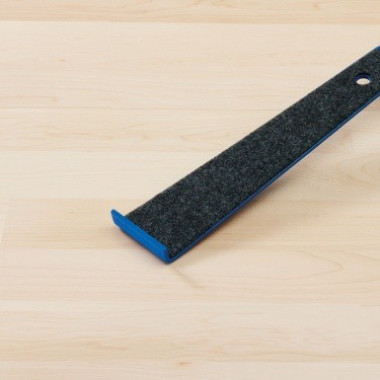
Montavimo strypai
Montavimo strypai
Montavimo strypai
Montavimo strypai
Montavimo strypai
Montavimo strypai
Montavimo tašelis
Montavimo tašelis

Completed works

All projects
Doors
Doors
Doors
Doors
Doors
Doors
Doors
Doors
Doors
Doors
Doors
Doors
Doors
Doors
Doors
Floors
Floors
Floors
Floors
Floors
Floors
Floors
Floors
Floors
Floors
Floors
Floors
Floors
Floors
Floors
Floors
Floors

Reviews from our clients

Puikus ir išsamus aptarnavimas, gavome daug naudingų patarimų, draugiškos kainos. Duris gavome kada ir buvo žadėta, o sumontuota labai greit ir kokybiškai.

Gabriele

It is a long established fact that a reader will be distracted by the readable content of a page when looking at its layout.

The point of using Lorem Ipsum is that it has a more-or-less normal distribution of letters, as opposed to using 'Content here, content here', making it look like readable English.

Brandon Ingram

It is a long established fact that a reader will be distracted by the readable content of a page when looking at its layout. The point of using Lorem Ipsum is that it has a more-or-less normal distribution of letters, as opposed to using 'Content here, content here', making it look like readable English. The point of using Lorem Ipsum is that it has a more-or-less normal distribution of letters, as opposed to using 'Content here, content here', making it look like readable English.

It is a long established fact that a reader will be distracted by the readable content of a page when looking at its layout. The point of using Lorem Ipsum is that it has a more-or-less normal distribution of letters, as opposed to using 'Content here, content here', making it look like readable English.

Cody Miller-McIntyre

It is a long established fact that a reader will be distracted by the readable content of a page when looking at its layout.

The point of using Lorem Ipsum is that it has a more-or-less normal distribution of letters, as opposed to using 'Content here, content here', making it look like readable English.

Greg Monroe

It is a long established fact that a reader will be distracted by the readable content of a page when looking at its layout. The point of using Lorem Ipsum is that it has a more-or-less normal distribution of letters, as opposed to using 'Content here, content here', making it look like readable English.

Patrick Beverley

FAQ

Can flooring be installed over underfloor heating?

Can Flooring Be Laid Over Underfloor Heating? Everything You Need to Know

Underfloor heating has become a standard feature in modern homes, ensuring maximum comfort and energy efficiency. Naturally, when furnishing a home, a fundamental question arises: is the chosen flooring material suitable for installation over underfloor heating?

The short answer is yes, the vast majority of modern flooring options are perfectly adapted for underfloor heating. However, different materials have different thermal conductivity profiles, and their installation requires strict adherence to specific guidelines.

The specialists at Lenex share the key aspects you must consider when choosing a flooring covering for a heated subfloor.

The Most Important Metric – Thermal Resistance (R-value)

When selecting a flooring covering for underfloor heating, the most critical factor to look for in the product's technical specification is its thermal resistance (R-value).

  • According to European standards (EN 1264), the combined thermal resistance of the flooring covering and its underlay should not exceed 0.15 m²K/W.
  • If this limit is exceeded, the heating system will operate inefficiently – the floor will block the heat, leading to higher energy costs and slower room heating.

Vinyl Flooring on Underfloor Heating: The Efficiency Leader

Vinyl flooring (LVT) is one of the absolute best choices for underfloor heating.

  • Maximum Heat Conductivity: Vinyl is a thin material (usually 2–5 mm) with extremely low thermal resistance (around 0.01–0.02 m²K/W). Heat transfers from the concrete into the room almost instantly.
  • Stability: Vinyl does not react to temperature fluctuations, meaning the planks will not warp, cup, or deform.
  • Installation Tip: To achieve the best thermal performance, Lenex recommends choosing glue-down vinyl. If you opt for a "Click" system, ensure that the integrated or separate underlay is also specifically rated for underfloor heating.

Wooden Flooring on Underfloor Heating: Myths and Reality

There is still a common myth that wood cannot be laid over a heated subfloor. This is untrue; however, wood (as a natural material) requires stricter discipline.

  • Engineered Planks Only (Two-layer or Three-layer): Solid wood planks (single-layer wood) must not be installed over underfloor heating, as they will shrink and crack severely due to temperature and humidity changes. Engineered (multi-layer) parquet planks are dimensionally stable and perfect for heating.
  • Slightly Higher Resistance: Wood warms up more slowly than vinyl or tiles (with a resistance ranging from roughly 0.05 to 0.10 m²K/W), but once heated, it retains and radiates heat for a very long time.
  • Gluing is Mandatory: Wooden parquet planks over underfloor heating must be fully glued to the subfloor. If installed using the floating method, the air gap left between the flooring and the concrete would act as insulation and block the heat.

Golden Rules for Operating Underfloor Heating

Regardless of whether you choose wood or vinyl, follow these rules to ensure your flooring lasts for years:

  1. Gradual Heating Activation: When the heating season starts, increase the temperature gradually (by 1–2 °C per day). At the end of the season, lower it just as slowly.
  2. Maximum Temperature Limit: The surface temperature of the floor should never exceed +27 °C. This is exceptionally important for wooden floors to prevent them from overheating and drying out.
  3. Humidity Control: Ideal indoor humidity should be maintained between 40% and 60%. This is healthy not only for your wooden floors but also for your respiratory tract.

Summary: Which One to Choose?

If your main goal is the fastest heat transfer and maximum energy efficiency, choose vinyl flooring. If your priority is the cozy feel of bare feet, natural materials, and luxury, choose engineered wooden parquet and ensure it is reliably glued down.

Do you have questions about a specific flooring model or its technical features? Get in touch with the Lenex team – we will help you choose the floor that creates the perfect balance of warmth and aesthetics in your home!

Wooden vs. Vinyl Flooring: Which One to Choose for Your Home?

Wooden vs. Vinyl Flooring: Which One to Choose for Your Home?

Choosing the right flooring is one of the most important decisions when furnishing or renovating a home. Floors lay the foundation for the entire interior, and your choice determines not only the aesthetics but also daily comfort and maintenance needs. The most common dilemma our clients face is: wooden or vinyl flooring?

Both options offer unique advantages, so the final decision depends on your lifestyle, budget, and the purpose of the room. Let’s look at the essential differences between these coverings to make your choice easier.

Wooden Flooring – Timeless Classic and Natural Appeal

Wooden floors (especially engineered wood flooring) are associated with luxury, coziness, and longevity. It is an investment that only increases the value of real estate over the years.

  • Natural Coziness: Wood is a poor conductor of heat in a good way – it naturally stays warm and pleasant to the touch, even without underfloor heating.
  • Exceptional Uniqueness: Every wooden plank has a unique pattern, knots, and texture. No two wooden floors are exactly the same.
  • Restoration Potential: High-quality wooden floors can be sanded, oiled, or lacquered again after a couple of decades, completely bringing them back to life.

When to choose wood? If you value natural materials, ecology, love walking barefoot at home, and want a floor that will last for decades.

Vinyl Flooring (LVT) – Maximum Practicality and Durability

Vinyl flooring (Luxury Vinyl Tiles – LVT) has been experiencing a true renaissance in recent years. Modern technology allows for the creation of floors that visually look almost identical to real wood but offer incredible physical resistance.

  • 100% Moisture Resistance: Unlike wood, vinyl is not afraid of water. You can safely install these floors throughout your home, including the bathroom or kitchen.
  • Extreme Durability: Vinyl floors are highly resistant to scratches, impacts, and daily wear and tear. This is an ideal choice if you have young children or pets at home.
  • Perfect for Underfloor Heating: Vinyl has a very low thermal resistance, allowing heat from the underfloor heating system to spread into the room quickly and efficiently.

When to choose vinyl? If you are looking for a "fit and forget" type of solution, want a continuous flooring surface throughout the whole house, and do not want to worry about spilled water cups or pet claws.

Comparison of Essential Features

To make your decision even simpler, let's compare these two popular coverings across key everyday criteria:

Criterion Wooden Flooring (Engineered) Vinyl Flooring (LVT)
Water Resistance Sensitive to moisture, puddles cannot be left 100% waterproof
Scratch Resistance Medium (wood is a softer material) Very high (protective polyurethane layer)
Warmth to Touch Naturally warm and cozy Warm, but performs best with underfloor heating
Acoustics (Noise) Can echo (requires a high-quality underlay) Naturally absorbs sound, soft step
Lifespan 50+ years (can be restored) 15–25 years (depending on the wear layer)

The Final Verdict: Which One Should You Choose?

There is no single correct answer – it all depends on your priorities. If your priority is authenticity, natural appeal, and long-term value, invest in wooden flooring. It will bring unmatched warmth and elegance to your home.

If your daily life involves a busy schedule, kids, pets, and you are looking for a highly practical, easy-to-clean, and scratch-resistant surface, vinyl flooring will be your best choice.

Still hesitating? Get in touch with Lenex specialists. We will help you assess your room specifications, budget, and needs to select the floors that will bring you joy every single day

Wooden vs. Vinyl Flooring: Which One to Choose for Your Home?

Installing Wooden vs. Vinyl Floors: Key Technical Differences

Installing Wooden vs. Vinyl Floors: Key Technical Differences

Choosing a flooring material is only half the battle. For the floors to last for years, remain quiet, and not warp, it is crucial to understand their installation specificities. The installation technologies for wooden and vinyl floors differ fundamentally in terms of subfloor preparation, tools, and the process itself.

Here is what you need to know about the installation of both coverings before starting the work.

Wooden Flooring Installation: A Process Requiring Craftsmanship and Precision

Wood is a living, natural material that reacts to changes in environmental humidity and temperature – it expands and contracts. Because of this, the installation of wooden flooring (parquet planks) requires more preparation and strict adherence to rules.

  • Acclimation is Required: Before starting the work, wooden planks must be kept in their closed packaging in the room where they will be installed for at least 48 hours.
  • Gluing to the Subfloor is Preferred: Although some engineered wood planks can be installed using the "floating" method, Lenex specialists recommend full-surface gluing to the subfloor. This ensures maximum stability, better heat conductivity (if underfloor heating is used), and eliminates any hollow thumping sounds when walking.
  • Strict Subfloor Moisture Requirements: Wood cannot be laid on damp concrete. The subfloor moisture level must not exceed 2% (or 1,8% if an underfloor heating system is installed).
  • Expansion Gaps: It is necessary to leave 10–15 mm expansion gaps around walls, door frames, and other obstacles so the wood has room to move.

Vinyl Flooring Installation: Speed, Versatility, and Two Installation Methods

Vinyl flooring (LVT) is much thinner and more flexible than wood. Its installation is faster and cleaner, but it requires an ideally flat subfloor, as even the smallest concrete unevenness or tiny pebbles will show through the thin vinyl layer over time.

Depending on the type of vinyl chosen, the installation is divided into two main methods:

1. The "Click" Lock System with Integrated Underlay – The Fastest Method

This is currently the most popular choice on the market. These planks are connected to each other using special factory-made interlocking profiles without using any glue (the "floating" method).

  • Integrated Underlay: Modern high-quality vinyl planks already come with a factory-attached special underlayment. This means you do not need to buy and lay an extra layer – the flooring goes directly onto the prepared concrete.
  • Acoustics and Speed: The integrated underlay perfectly absorbs footstep sounds and cuts the installation time in half. It is an ideal solution for those looking for quick DIY-friendly results.

2. Glue-Down Vinyl – For Maximum Stability

With this method, thin vinyl planks are glued directly to the subfloor using special adhesives.

  • Where It Is Used: Perfect for large, continuous spaces without any door thresholds or expansion profiles between rooms.
  • Benefits: Because the flooring is fully glued down, it ensures the best possible heat transfer from underfloor heating systems and maximum stability in commercial or high-traffic areas.

Core Comparison of Installation Specifics

Feature Wooden Flooring Vinyl Flooring (LVT)
Subfloor Unevenness Tolerance Medium (can hide minor defects) Very low (subfloor must be perfectly flat)
Process Complexity High (professional installers recommended) Medium/Low (especially with the "Click" system)
Thresholds Between Rooms Usually required in larger spaces Glue-down vinyl needs no thresholds throughout the house
Cleanliness of Work More dust (from cutting wood) Very clean (vinyl is scored and snapped with a utility knife)

No matter which flooring type you choose, quality installation is the guarantee of final success. Contact the Lenex team – we will not only help you choose the right covering but also take care of its professional installation so your new floors perform flawlessly!

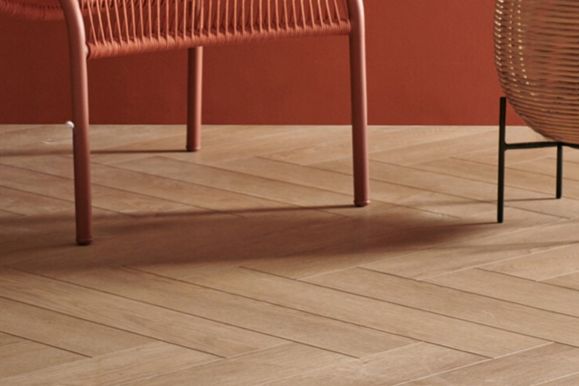
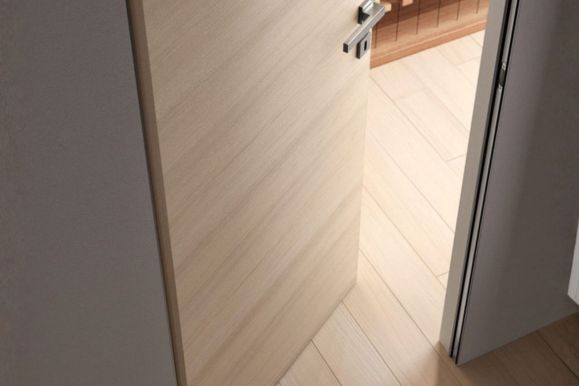
Installing Wooden vs. Vinyl Floors: Key Technical Differences

There are four main types of cookies used on the Lenex website.

By continuing to browse, you agree to the necessary cookies. You may also agree to the use of other cookies. Detailed information about cookies and their usage is available in our Privacy Policy.